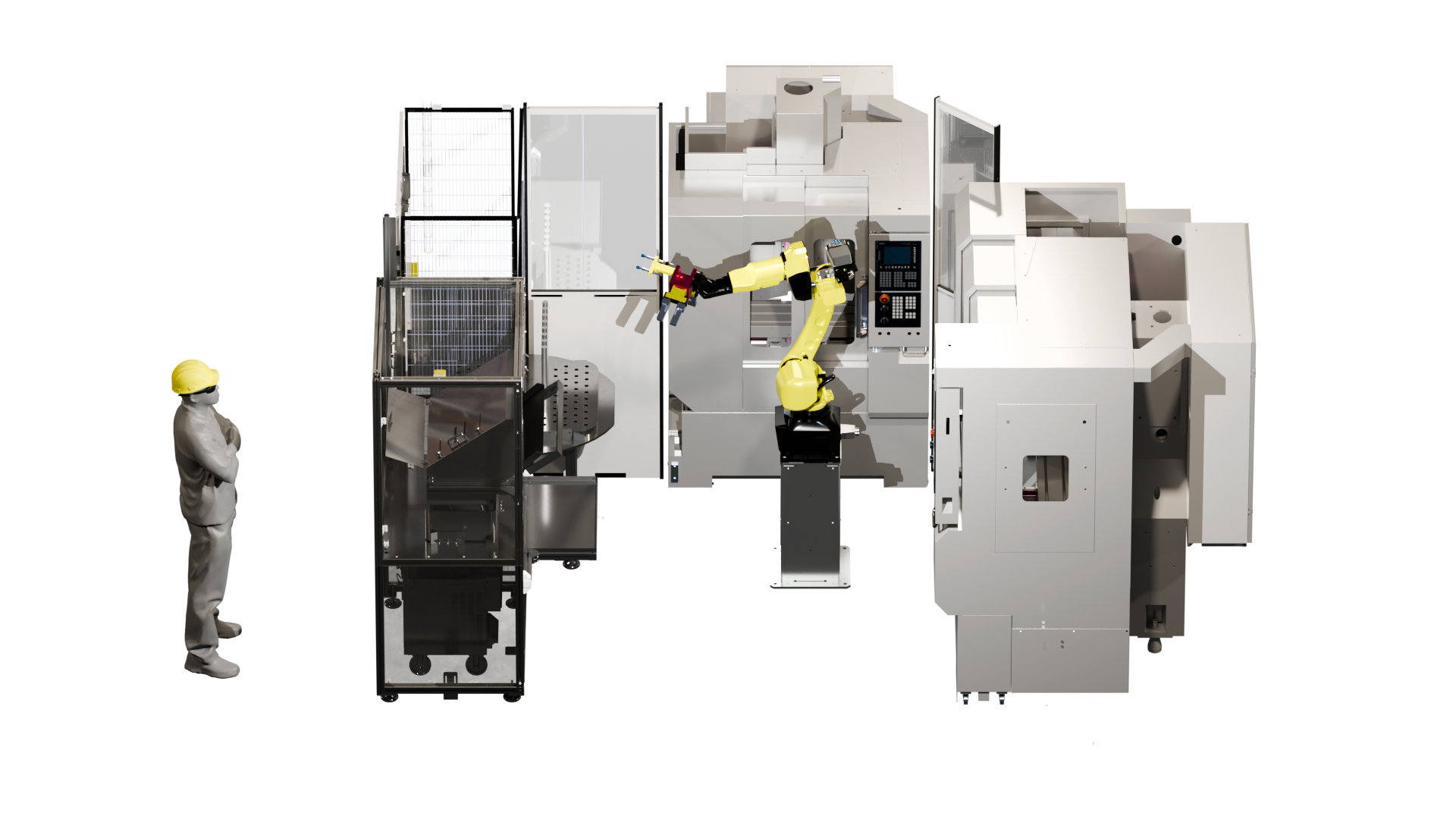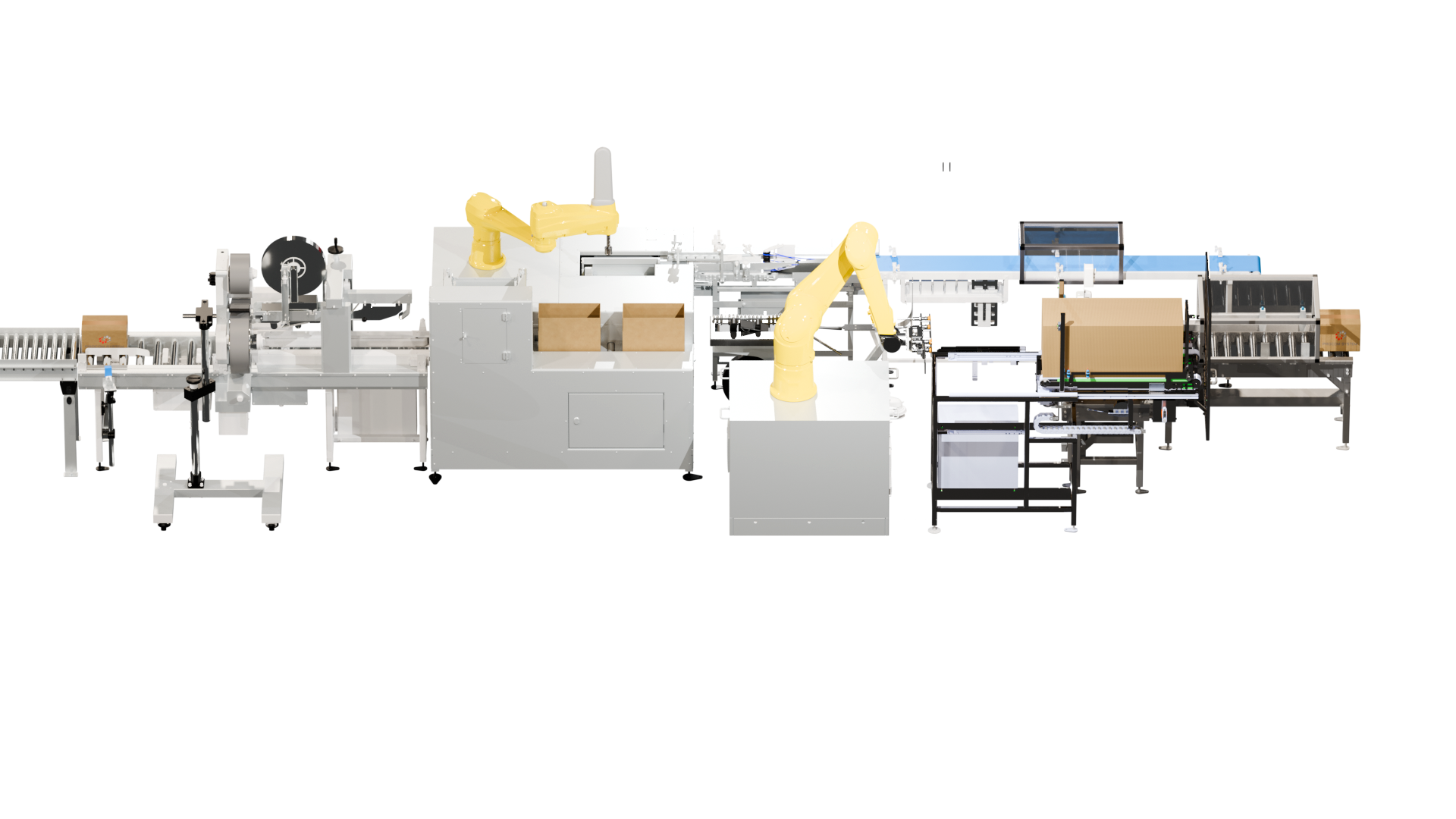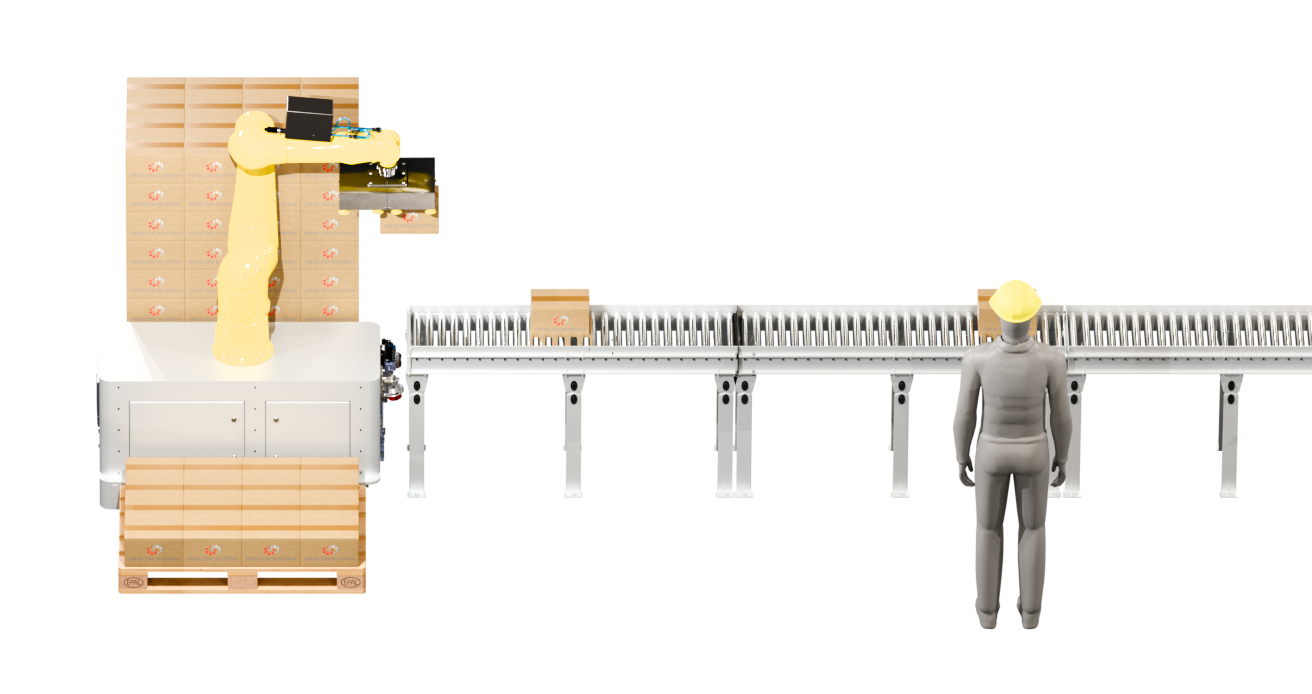


Modern manufacturing increasingly relies on the automation of processes that were previously performed manually. One such area is the time-consuming and monotonous palletizing of cartons, often fraught with error. In response to these challenges, we implemented an innovative, open palletizing station, in which an intelligent safety scanner system plays a key role. The main goal of the project was to relieve operators of the monotonous, physically demanding tasks of stacking cartons while ensuring the continuity of two production lines.
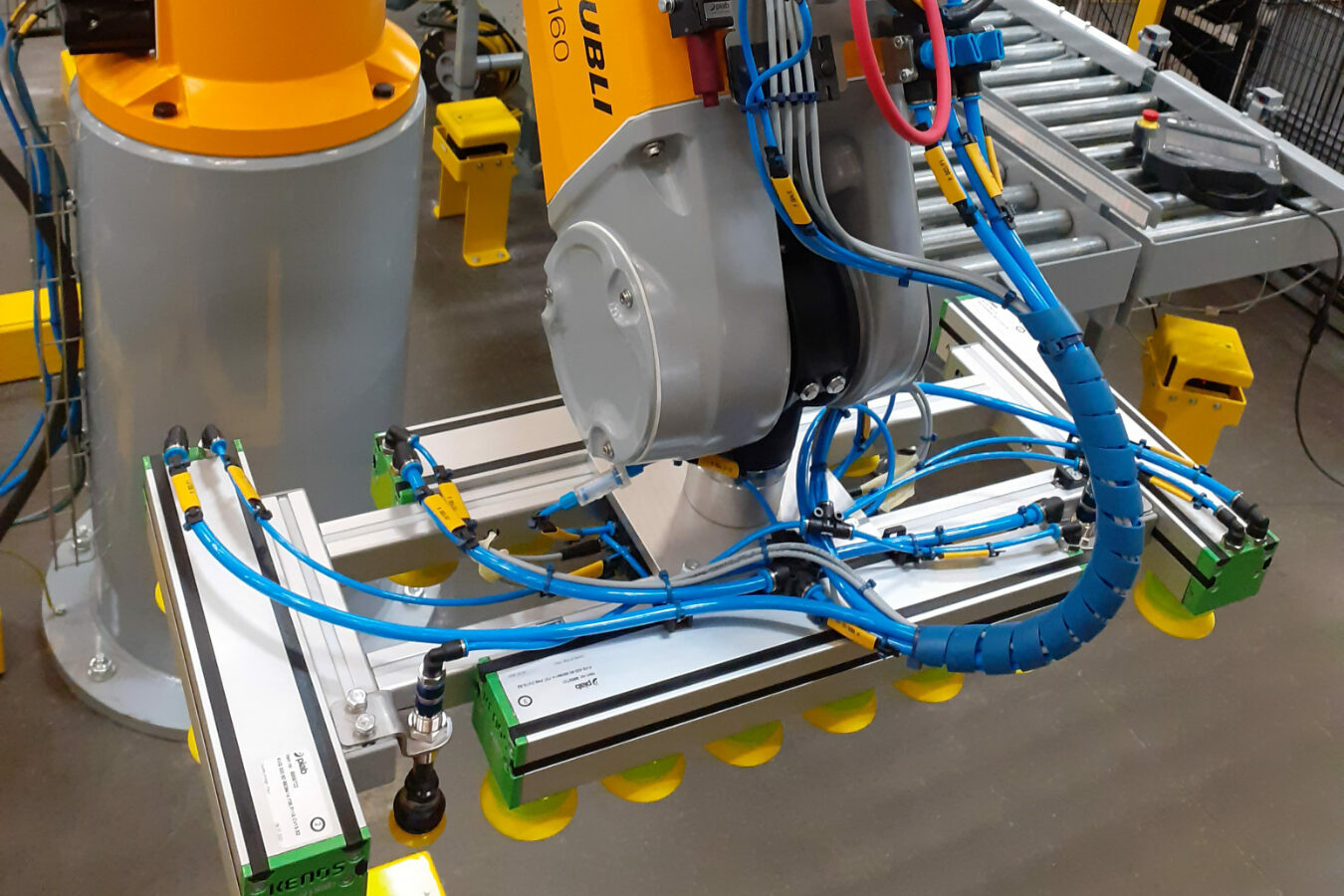
One of the biggest challenges during system implementation was designing a workstation that would handle diverse products simultaneously in a tight production space, while ensuring the highest safety standards. Furthermore, the system had to ensure smooth operation without the micro-downtime typical of traditional locking door solutions. Our engineers opted for an innovative solution—a modular, multi-function gripper and solutions based on the Sick NanoScan laser scanner system, which replaced conventional mechanical safeguards.
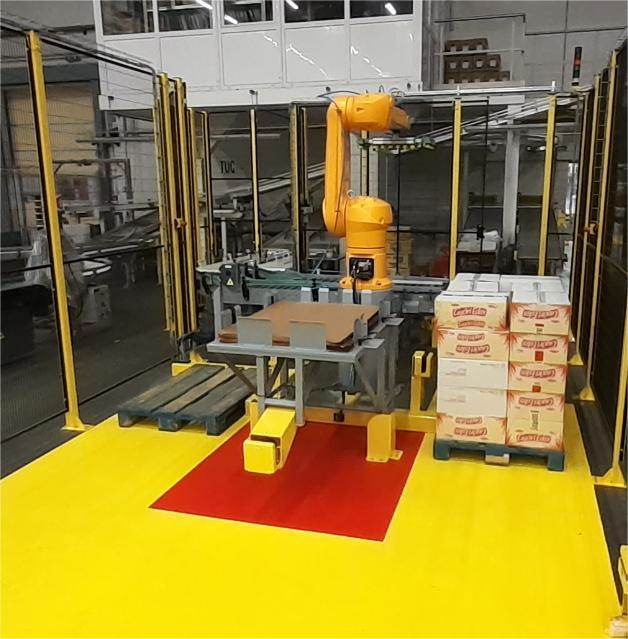
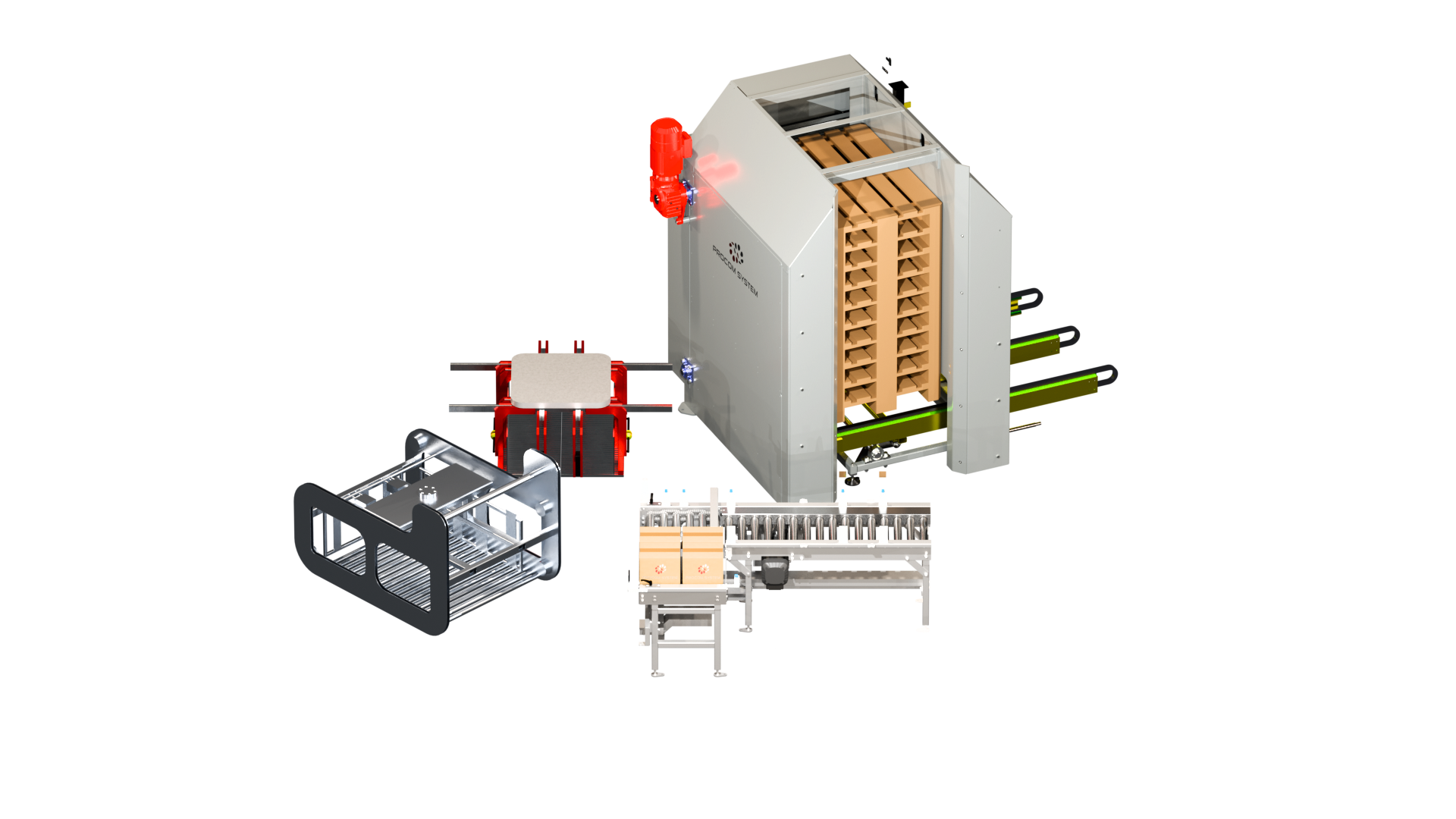
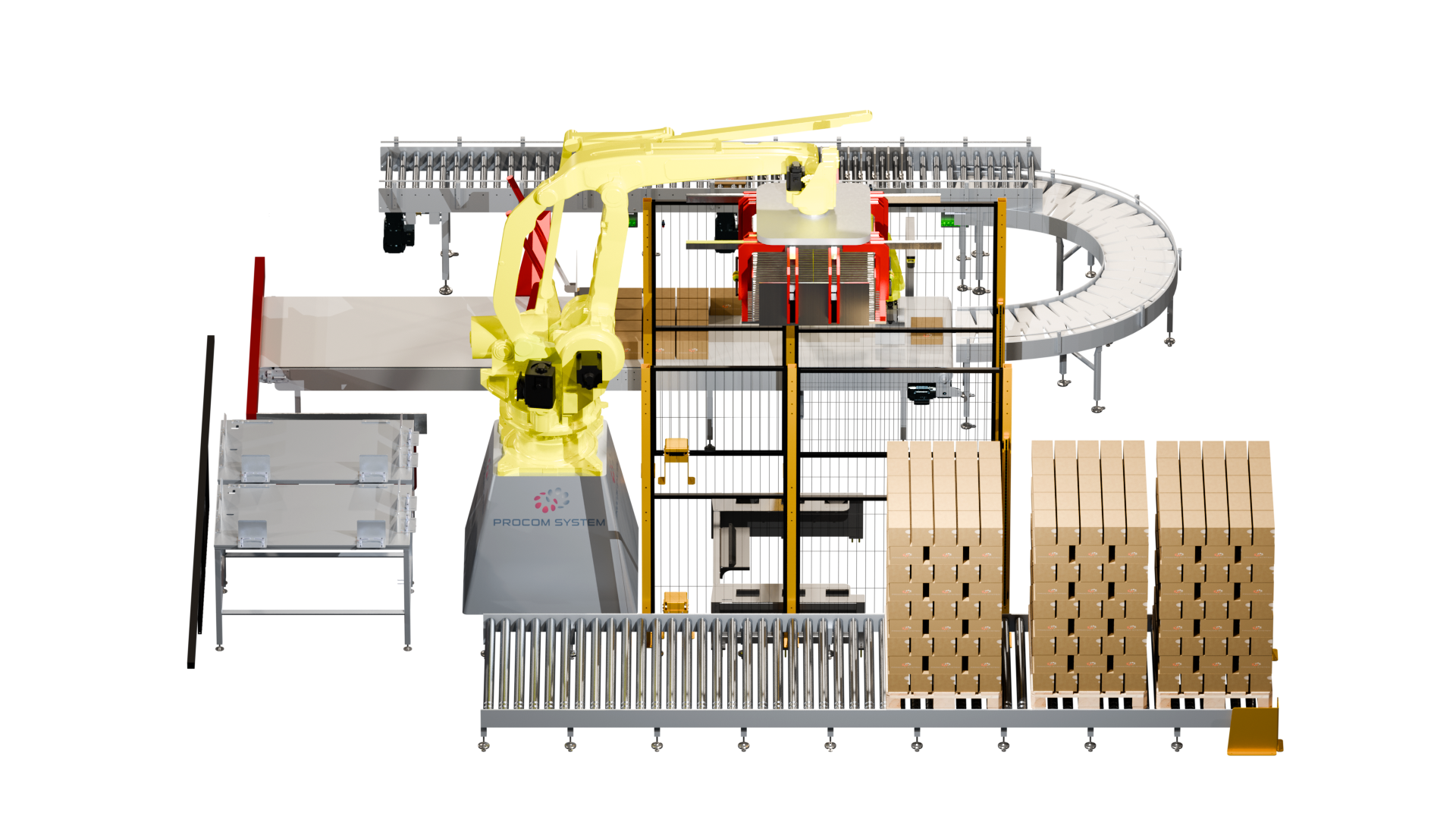
The heart of the designed station is an industrial robot equipped with a universal vacuum gripper, capable of handling various product references and paper pallet spacers without any retooling. Thanks to its flexibility and ability to handle a wide range of components, the system is a key advantage in the demanding packaging area. Two infeed conveyors ensure continuous material supply from various production lines and pre-aggregate packages, further increasing the station’s efficiency.
The real innovation, however, is the scanner-created safety zone system. Thanks to the use of a modern system of five 2D laser scanners that create intelligent safety zones, high precision in monitoring the space has been achieved, ensuring Pl-d safety categories and eliminating downtime. The operator has free access to the station to retrieve a finished pallet without interrupting the robot’s work. When the operator enters the yellow zone, the robot automatically reduces speed but continues palletizing on the opposite side of the station without interrupting work. Vertical scanners create a virtual barrier separating the work zone, while horizontal sensors monitor the operator’s presence. Only entering the red zone immediately causes the machine to stop.
This implementation confirms that integrating advanced safety systems is the future of industrial automation. The new station significantly reduced operator work time at the station, limiting their role solely to receiving finished pallets. Furthermore, micro-downtime was reduced by up to 40%, directly reducing operating costs and increasing the efficiency of the entire process.
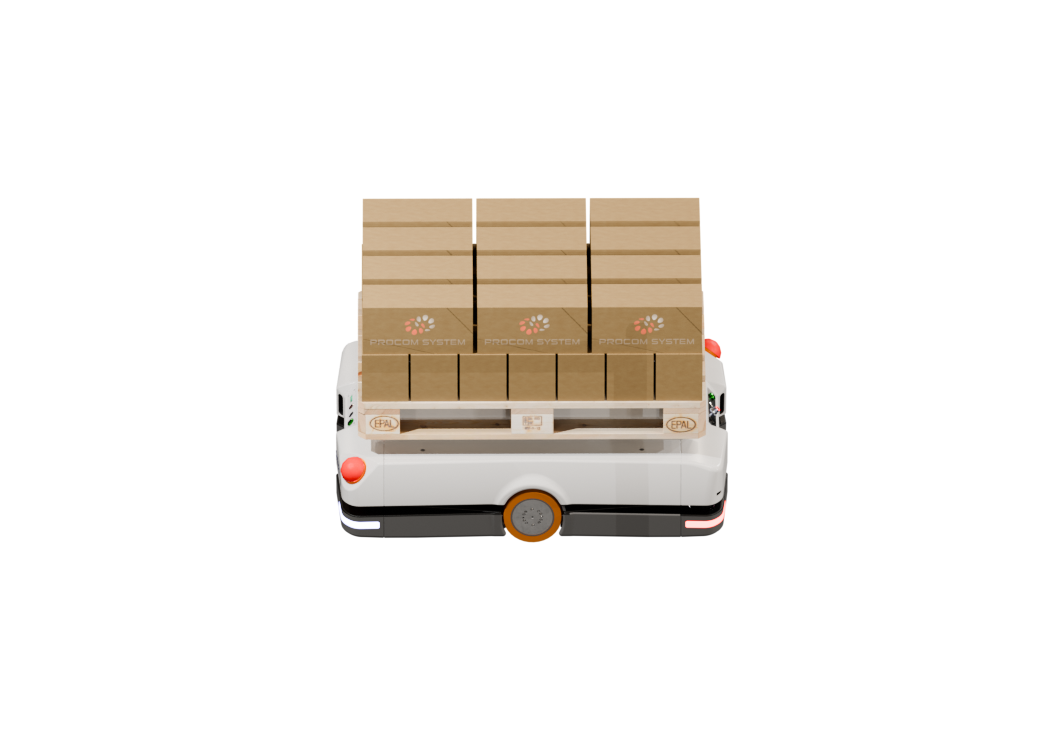
Operators particularly appreciated the ergonomics of the solution; replacing pallets or replenishing spacers doesn’t require stopping the station, and therefore the production line. Furthermore, the installation’s design is also adapted to the future expansion of the production line with autonomous forklifts, which, with minor modifications to the station, will be able to take over logistics operations.